XXXXXXXXXXX

(2021 - 2024)

February 12, 2022

Simplot

Simplot

Simplot

Create a fresh, bold design that was both functional and aesthetically pleasing for the upcoming festival

Create a fresh, bold design that was both functional and aesthetically pleasing for the upcoming festival

Create a fresh, bold design that was both functional and aesthetically pleasing for the upcoming festival

Year

2022

Client

Simplot

Category

UX
Ux & Branding

Product Duration

14 weeks
Take complex & Antiquated agricultural systems and distill them down into a streamlined mobile and tablet experience with offline capabilities.
STRATEGY & Implementation
Overview

The strategy for this work focused on designing a scalable, mobile-first product experience that could support the complexity of agricultural data while remaining usable in real-world field conditions.


Simplot’s users rely on accurate, layered information—often outdoors, on mobile devices, and under time pressure. The challenge was balancing data density and clarity, ensuring users could quickly access critical insights without feeling overwhelmed.


Early discovery centered on understanding:


  • How growers and field operators navigate spatial data

  • Which actions were most time-sensitive in the field

  • Where existing tools created friction through clutter, inconsistent patterns, or unclear hierarchy


From these insights, the design strategy prioritized:


  • A map-first interaction model with clear layering and progressive disclosure

  • Consistent, system-driven components that could scale across features

  • A mobile experience that felt purposeful, not a reduced desktop version

  • Clear entry points for search, filtering, and field-level actions


The goal was to create a product that felt powerful yet approachable, enabling users to move confidently between overview and detail.

Overview

The strategy for this work focused on designing a scalable, mobile-first product experience that could support the complexity of agricultural data while remaining usable in real-world field conditions.


Simplot’s users rely on accurate, layered information—often outdoors, on mobile devices, and under time pressure. The challenge was balancing data density and clarity, ensuring users could quickly access critical insights without feeling overwhelmed.


Early discovery centered on understanding:


  • How growers and field operators navigate spatial data

  • Which actions were most time-sensitive in the field

  • Where existing tools created friction through clutter, inconsistent patterns, or unclear hierarchy


From these insights, the design strategy prioritized:


  • A map-first interaction model with clear layering and progressive disclosure

  • Consistent, system-driven components that could scale across features

  • A mobile experience that felt purposeful, not a reduced desktop version

  • Clear entry points for search, filtering, and field-level actions


The goal was to create a product that felt powerful yet approachable, enabling users to move confidently between overview and detail.

Overview

The strategy for this work focused on designing a scalable, mobile-first product experience that could support the complexity of agricultural data while remaining usable in real-world field conditions.


Simplot’s users rely on accurate, layered information—often outdoors, on mobile devices, and under time pressure. The challenge was balancing data density and clarity, ensuring users could quickly access critical insights without feeling overwhelmed.


Early discovery centered on understanding:


  • How growers and field operators navigate spatial data

  • Which actions were most time-sensitive in the field

  • Where existing tools created friction through clutter, inconsistent patterns, or unclear hierarchy


From these insights, the design strategy prioritized:


  • A map-first interaction model with clear layering and progressive disclosure

  • Consistent, system-driven components that could scale across features

  • A mobile experience that felt purposeful, not a reduced desktop version

  • Clear entry points for search, filtering, and field-level actions


The goal was to create a product that felt powerful yet approachable, enabling users to move confidently between overview and detail.

Overview

The strategy for this work focused on designing a scalable, mobile-first product experience that could support the complexity of agricultural data while remaining usable in real-world field conditions.


Simplot’s users rely on accurate, layered information—often outdoors, on mobile devices, and under time pressure. The challenge was balancing data density and clarity, ensuring users could quickly access critical insights without feeling overwhelmed.


Early discovery centered on understanding:


  • How growers and field operators navigate spatial data

  • Which actions were most time-sensitive in the field

  • Where existing tools created friction through clutter, inconsistent patterns, or unclear hierarchy


From these insights, the design strategy prioritized:


  • A map-first interaction model with clear layering and progressive disclosure

  • Consistent, system-driven components that could scale across features

  • A mobile experience that felt purposeful, not a reduced desktop version

  • Clear entry points for search, filtering, and field-level actions


The goal was to create a product that felt powerful yet approachable, enabling users to move confidently between overview and detail.

Implementation


Implementation focused on translating complex workflows into clear, repeatable interaction patterns across mobile and desktop.


I led the design of end-to-end user flows, from initial entry points and search through map interaction, overlays, and detailed field views. Work was done primarily in Figma, with an emphasis on creating reusable components and patterns that could support future feature growth.


Key implementation efforts included:


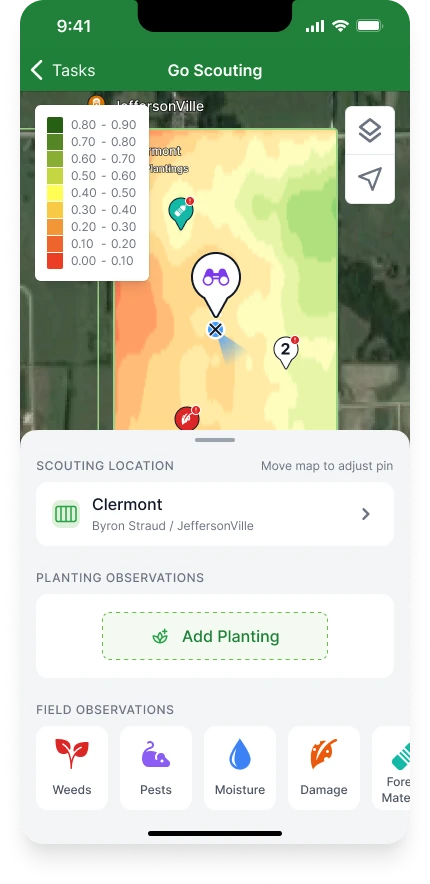
  • Designing a flexible map layer system, allowing users to toggle, compare, and interpret multiple data sets without losing context

  • Establishing a mobile-first hierarchy, ensuring primary actions were reachable and secondary controls were discoverable but unobtrusive

  • Creating consistent interaction models for overlays, filters, and detail panels

  • Building and documenting a design system that aligned visual consistency with engineering efficiency


Special attention was given to usability in the field—large tap targets, clear contrast, and minimal friction between actions—ensuring the product worked as intended in practical, real-world scenarios.
Key Insights


  • Progressive disclosure is critical for data-heavy products. Showing the right information at the right time prevented cognitive overload without sacrificing capability.

  • Maps are interfaces, not backgrounds. Treating the map as the primary interaction surface shaped better hierarchy and clearer user flows.

  • Mobile constraints sharpen decision-making. Designing for mobile first forced clarity around what truly mattered to users.

  • Systems thinking enabled speed. Reusable components and interaction patterns allowed the product to scale without design debt.
A few extra notes on the project
Modular Design


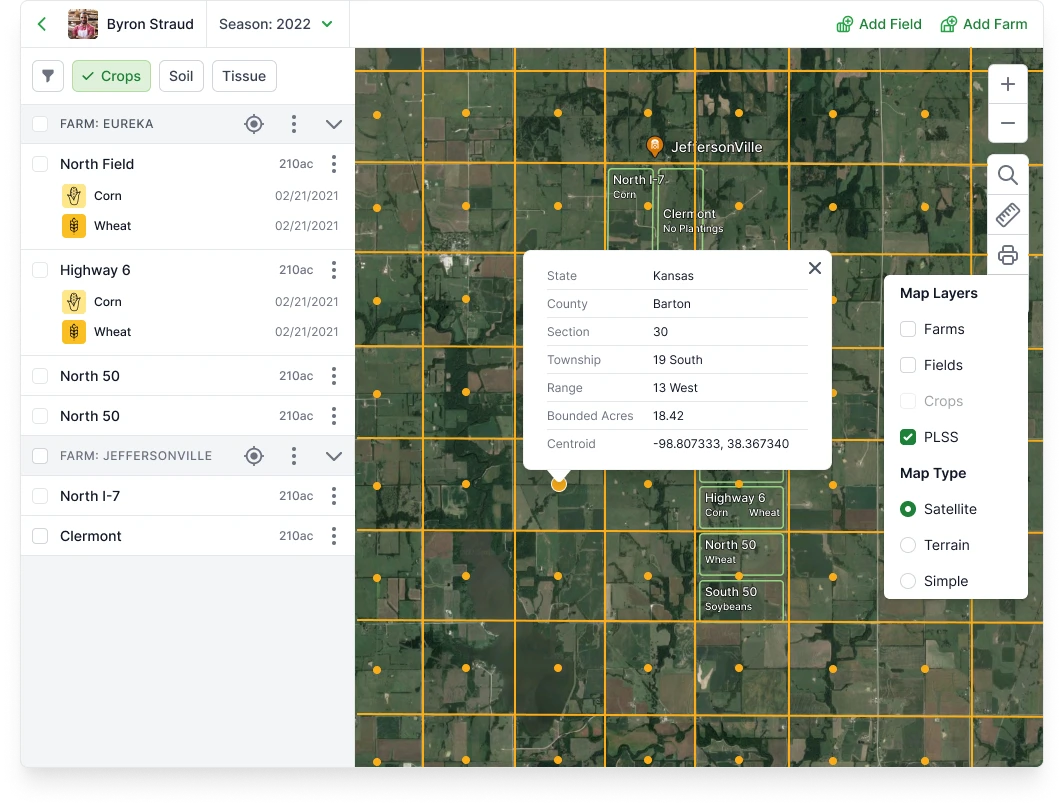
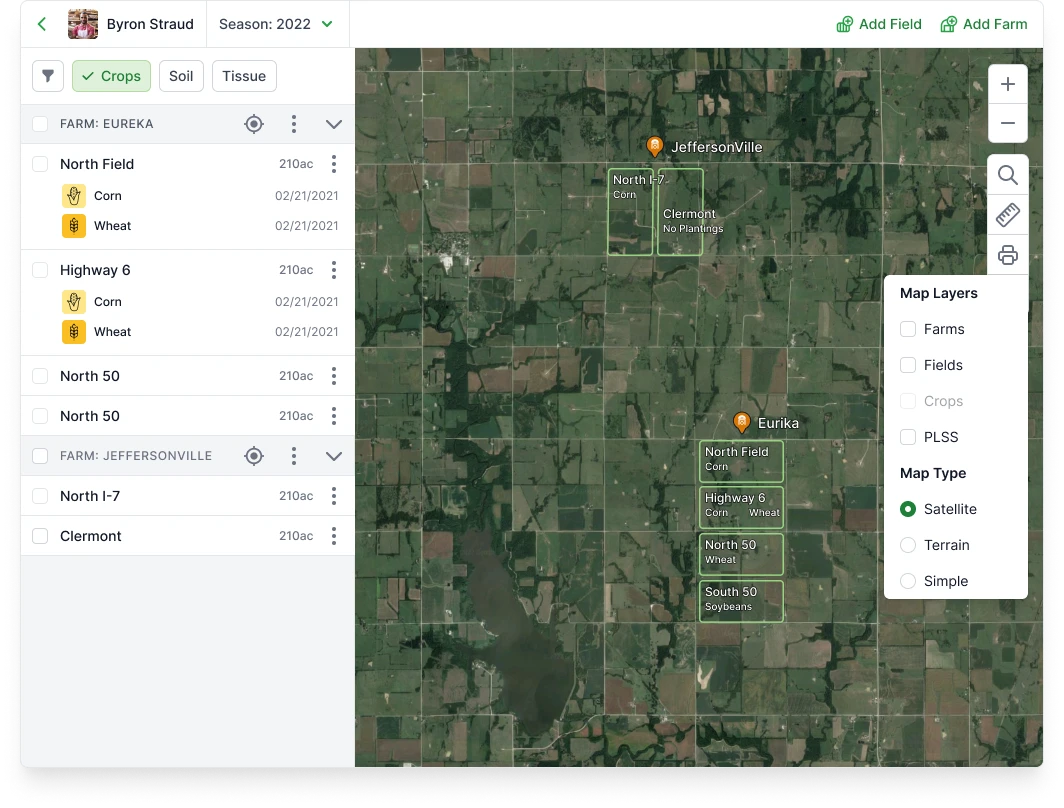
Each piece of navigation is meant to be a small lego piece that helps assemble the great picture of data that each farmer needs to see at a glance. Things as specific as what fields are being selected, where they are in relation to others, what crop is on them, as well as the specific farm they may be a part of all need to be present.

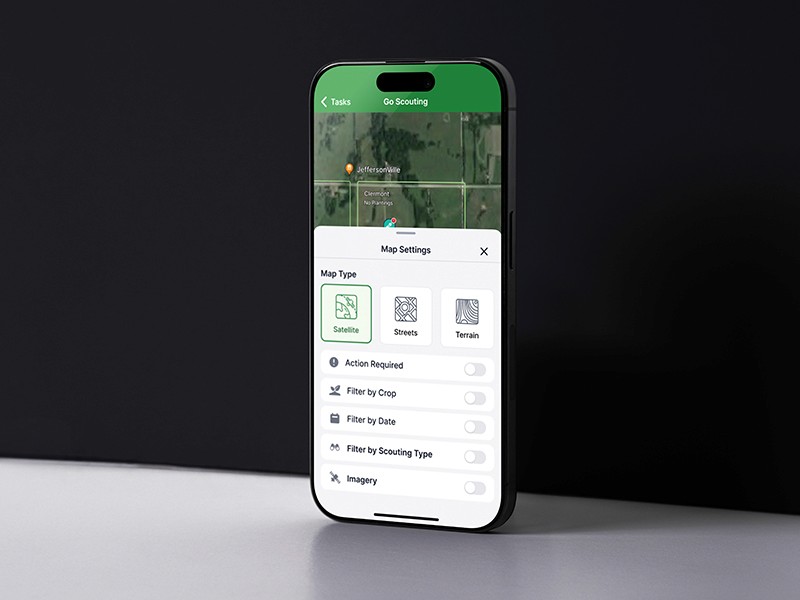
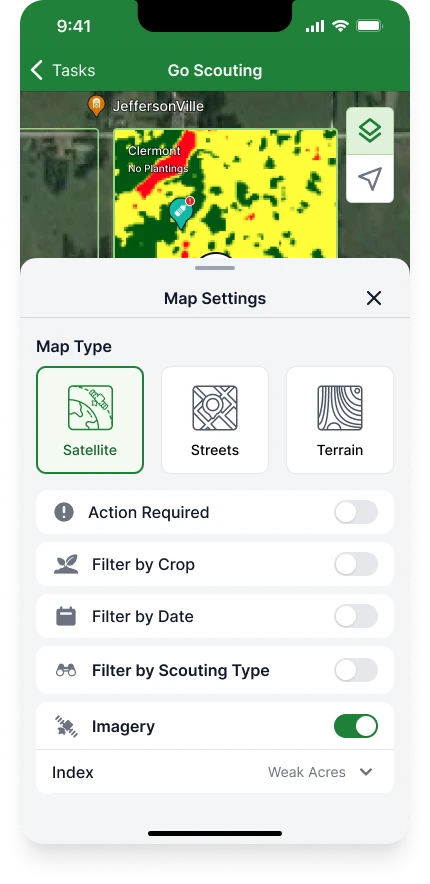
The map itself has many layers to its own navigation. Allowing for specific PLSS data to be viewed as well as terrain and satellite overlays.

Unique icons were created for all event instances that can be applied to fields. Whether thats a crop type, or even a pest type.

Design System


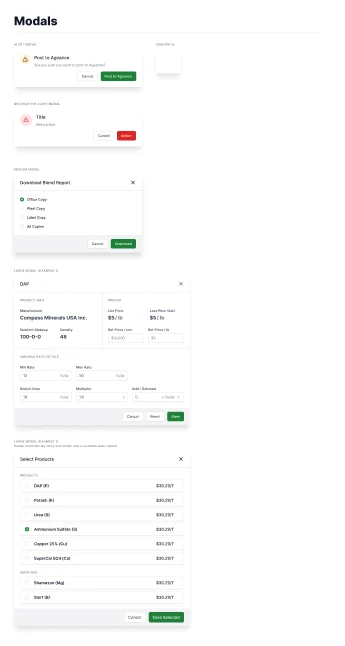
The Simplot design system has its roots in Tailwind but has since evolved from that to be its own unique version. Accents of green and grey help keep the complicated components looking simple, clean, and accessible.


We were constantly adding new pieces to the library but the whole system stems from a collective set of pieces that drive the brand look and field throughout.


Offline Capable


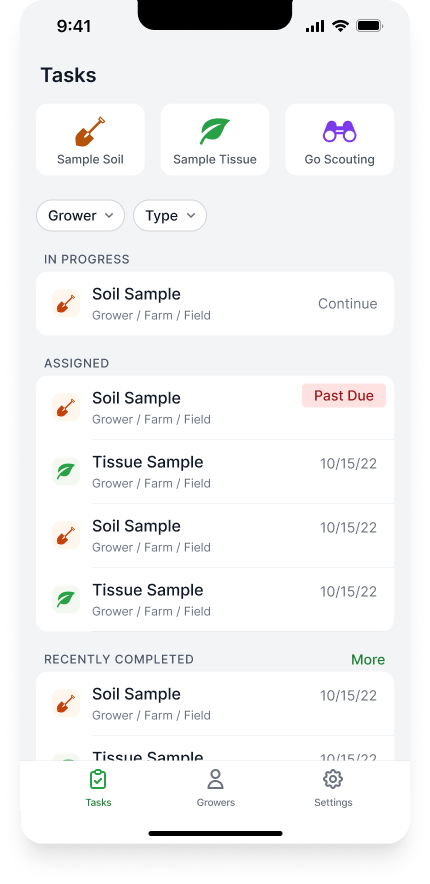
The entire project was designed with the perspective of a farmer out in a field viewing the product on a tablet or phone with minimal or no connection to internet or cell service. Many of the different pieces of the user interface can be exported as PDFs or still images to retain information at a glance. Information can also be downloaded and stored locally.
Mobile Scouting


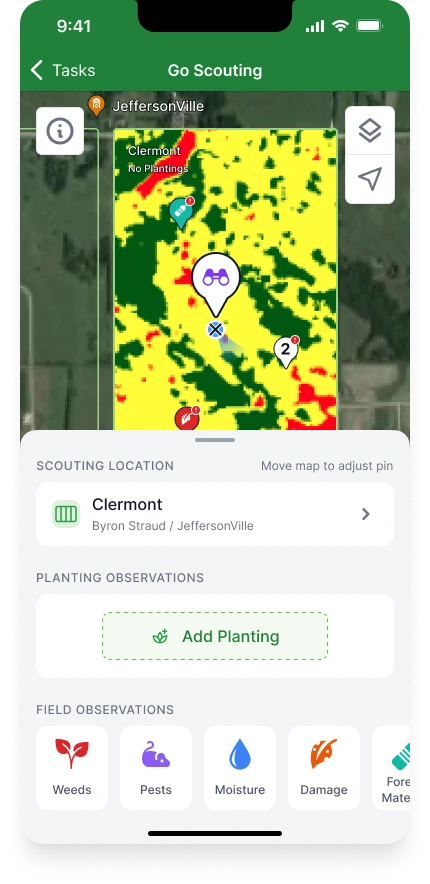
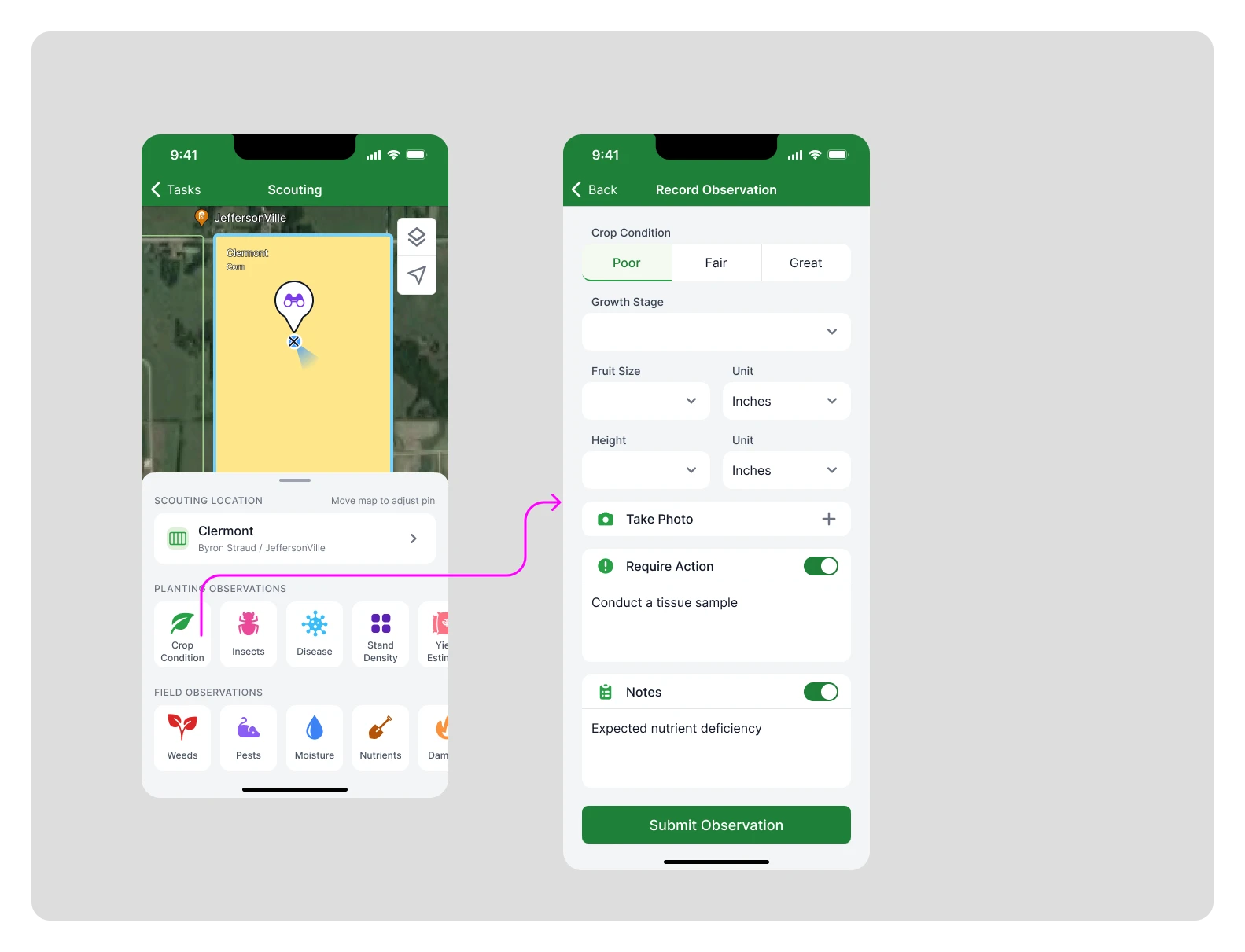
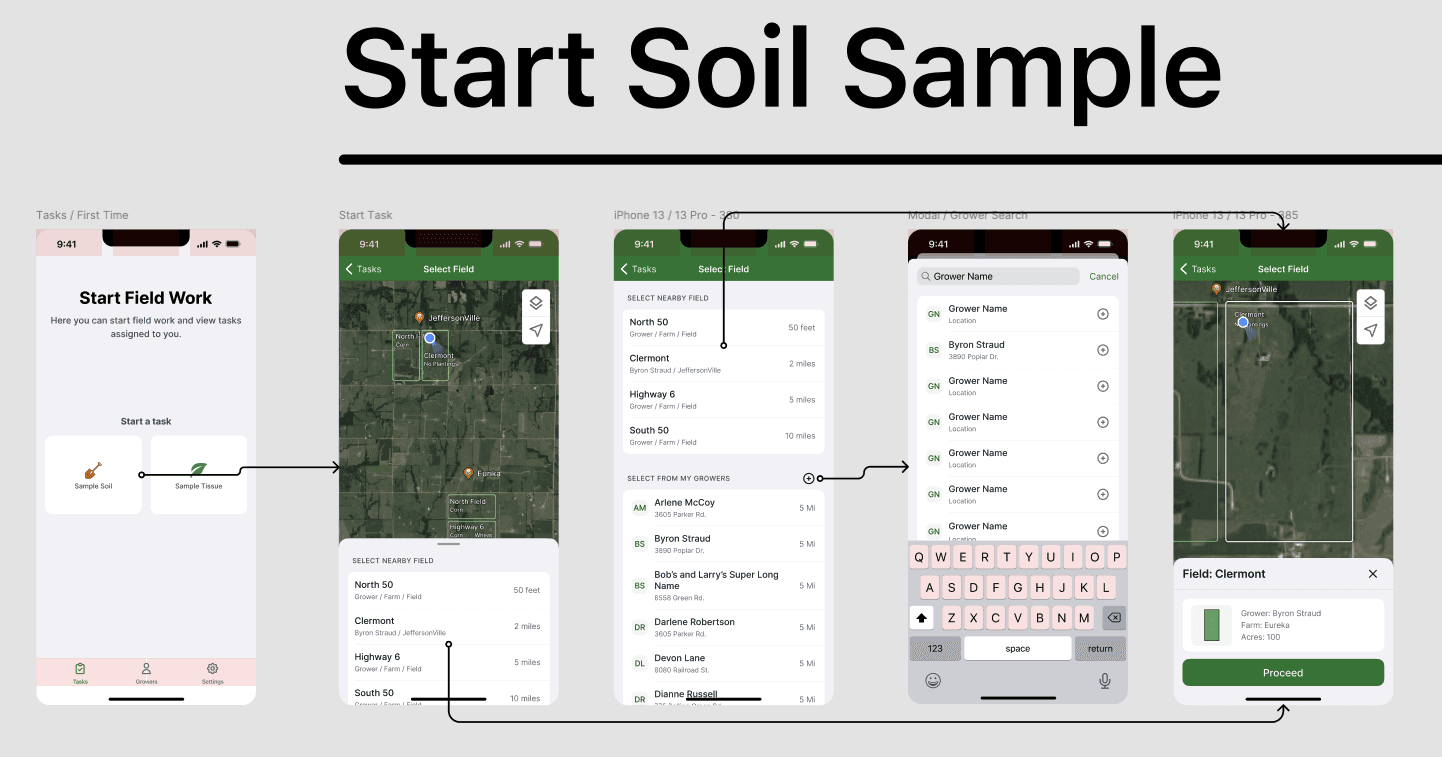
Scouting itself is no small feature. (overview screenshot below) and this the mobile portion of the feature. We also not only had to design the userflow from very quick 48 hour discovery meetings but also illustrate and dream up the icons and illustrations for each observation.


With 14 different types of scouting observations including a null state when you are inputting a new observation, the feature quickly expanded from a simple ask to a large set of userflows.